Konrad Sejer
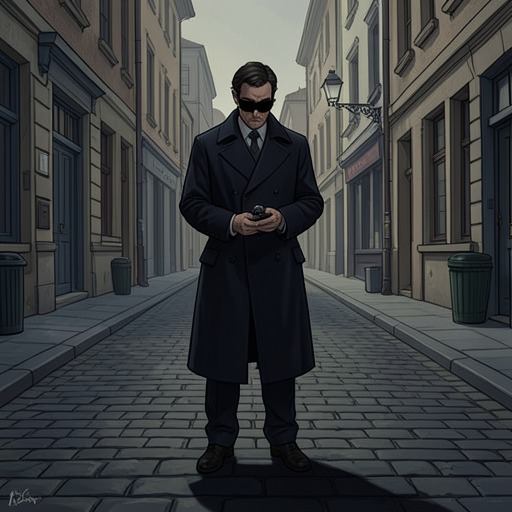
The CallerKonrad Sejer is an inspector who combines procedural patience with a keen, personal attention to fear, grief, and the small details of ordinary life. He asks people to reconstruct their routines, imagines what a victim might experience, and forms hypotheses without confusing them with proof. His investigations are also shaped by a history of care: as a father and grandfather, he recognizes the security a child can depend on, and the damage caused when that security is absent.
Identity and Investigative Method
Sejer enters the Sundelin case with his younger colleague Jacob Skarre, arriving without uniforms after the commotion surrounding baby Margrete Sundelin. Rather than begin by treating the family as a set of statements, he looks at the sleeping child and asks Lily Sundelin how she is doing. His response to her promise that Margrete will no longer sleep in the garden is understanding, not blame. The exchange establishes an investigator who can acknowledge a family’s immediate fear before turning to the work of finding whoever caused it.
That work begins with close attention to memory and routine. Sejer asks Lily to write down everything she can recall from the day, starting when she got up: what she did, whether anyone drove past or called, whether a caller hung up, whether anything arrived in the post, and whether anyone walked slowly past the house. He also asks whether she remembers an old quarrel or felt watched. The questions are deliberately expansive: details that seem unrelated may acquire meaning when placed beside one another. He says investigators will search the garden promptly because the perpetrator may have left something behind. His method joins a practical concern for preserving possible evidence to an understanding that a victim’s recollection may need quiet and time to surface.
Sejer’s empathy is not merely bedside manner. He tells Lily that he once had a child of his own and has not forgotten what caring for one feels like. She is moved by his seriousness and understanding, and recognizes that police officers, too, live with grief and despair even as their work forces them to approach other people’s tragedies. Sejer does not claim to share the family’s precise experience; his personal history helps him meet it without reducing it to a case file.
Intuition, Probability, and Evidence
In discussing the attack on the Sundelins, Sejer’s colleagues invite him to speculate about the perpetrator. He initially cautions that it is too early to do so. When he does offer a profile, he presents it as a conclusion of probability: he thinks the offender is a man, between seventeen and sixty, neglected and socially invisible, introverted, bitter, and eager for respect. He imagines someone with little income, few close relationships, and emotional immaturity, possibly living with his mother or keeping an animal in a cage. These are conjectures, not established facts, and the scene shows both the reach and the risk of his instinct. Skarre is curious about Sejer’s reading of people, but Sejer’s own warning against premature conclusions keeps intuition distinct from evidence.
The investigators consider possible explanations for the attack without settling on one. Sejer suggests that the Sundelins may have offended someone unknowingly, but also considers a mentally unstable person acting out of grief, abuse, or a desire for revenge. He describes how a person who has been tormented may torment others, while leaving the perpetrator’s identity and motive unresolved. His habit is to generate possibilities that can guide inquiry, not to present an appealing theory as a solution. The distinction matters in a case where the offender’s planning may itself encourage speculation: Skarre observes that the garden attack appears to have required watching the household’s habits and knowing when Margrete slept.
Sejer’s thought experiment about a forged death notice illustrates another form of investigative attention. He asks Jacob Skarre how he would react to seeing his own obituary in the newspaper. Skarre imagines the horror and bewilderment of believing that acquaintances might read it as true, then asks whether the person behind the prank is the Wolverine. Sejer confirms that he means the Beast from Bjerkås. By asking the question through a possible victim’s experience, he makes the emotional consequences of the prank legible; by naming the suspected perpetrator, he connects that response to the wider campaign rather than treating the notice as an isolated joke.
Seeing Vulnerability
Sejer’s response to Helge Landmark’s encounter with a false funeral pickup is shaped by indignation on behalf of Helge and Astrid Landmark. He asks whether anyone has harassed them before and whether they can think of who sent the car. Helge, gravely ill and in a wheelchair, cannot answer. The narration follows his short-lived lift in spirits after the funeral-home men are caught off guard, then his return to physical weakness: the cognac that briefly made him feel more alive leaves him dizzy and heavy-lidded. Sejer’s presence also sharpens Helge’s painful comparison between his own failing body and the inspector’s strength. The scene does not make Sejer responsible for that comparison; it shows how an investigator’s ordinary physical presence can become charged for someone confronting illness and dependence. Sejer continues asking who knows Helge is ill, pursuing the circumstances of the deception even as the scene makes its personal cost plain.
In Evelyn Mold’s case, Sejer similarly reconstructs how the false hospital alert could have been arranged. He points out that Frances Mold’s name and address appeared in a newspaper article, making it easy to locate the family. He reasons that the caller must also have watched the house closely enough to know Frances was out on her scooter, and may have called from a kiosk. He asks Evelyn whether, while at the hospital reception, she felt watched. Evelyn recalls being overwhelmed by the crowd and movement through the entrance, too distressed to notice who might have looked at her. Sejer explains that the prankster typically appears to watch a prank unfold, then asks whether anyone visited her that day. His questions connect public information, surveillance, timing, and the victim’s state of mind into a testable account of how the deception worked.
Childhood, Security, and Responsibility
Sejer’s understanding of security reaches back to his own childhood. Walking with Frank, he remembers the white house on Gamle Møllevej outside Roskilde, the hollyhocks on its wall, the hens in the garden, and picking sour currants with his friend Ole. He remembers returning home without trepidation, welcomed as though his arrival mattered in itself. The memory gives concrete meaning to the stability he recognizes in a child who is loved and expected home.
That remembered welcome leads him to think of children for whom home offers no such certainty. Some, he reflects, enter frightened, encounter drunkenness, abuse, or violence, or leave again because what awaits them is unbearable. His thoughts turn to Ole, who was repeatedly sent away from his mother’s house for reasons that shifted with her moods: the weather was good, she was cleaning, a friend was visiting, or she had a migraine. There was no violence in Ole’s home, but Sejer remembers that there was no love either. Ole would go out in bad weather, return at night to make himself a sandwich, and creep to bed like a masterless dog. The memory complicates any simple equation between a house free of overt violence and a secure childhood.
Sejer rejects the idea that parents cannot be held responsible for the misery that follows their children. In his reflection, a child is exposed to a mother’s moods, anger, doubt, bitterness, and shortcomings, as well as a father’s despair, absence, and inattention. This conviction helps explain why he sees vulnerability as something created in relationships and daily conditions, not merely as an individual weakness. It also gives his attention to young offenders a social and emotional dimension, though it does not make him excuse their actions.
A Father-Figure to Johnny Beskow
Sejer’s relationship with Johnny Beskow changes through the repeated meetings required by Johnny’s reporting obligation. Johnny has lost the only person who meant anything to him, and Sejer becomes willing to occupy a father-figure role in the delinquent boy’s life. Their connection is quiet and practical rather than sentimental: Sejer sometimes brings simple food and heats it in the microwave, apologizing that he is a poor cook. Johnny answers by teasing him about serving frozen dinners and calling him Grandpa.
The warmth does not erase suspicion. Johnny asks whether Sejer’s attention is part of a plan to make him confess, insists that he will not walk into a trap, and reminds the inspector that he is not stupid. The exchange preserves the imbalance between them—Sejer is an investigator, and Johnny knows that kindness could have an investigative purpose—while also showing that their meetings have become more than formal supervision. Sejer does not force trust by denying Johnny’s distrust; he continues to show up, share food, and accept the boy’s guarded humor. In a narrative preoccupied with fear, neglect, and the desire for respect, this patient, limited form of care is a significant counterweight to the harm that has shaped their lives.